


Progressive Lenses vs. Bifocals: Which One Fits Your Lifestyle?
Vision changes with age rarely stop at one distance. Reading up close gets harder first, then screens at arm's length start to blur too, and eventually distance vision joins the list. Once glasses need to handle more than one visual range, the choice comes down to two main options: progressive lenses or bifocals.
Neither option is objectively better. The right fit depends on how you actually use your eyes throughout the day, not just your prescription numbers, and both designs have loyal wearers who wouldn't switch given the choice.
What's the Real Difference Between Progressive Lenses and Bifocals?
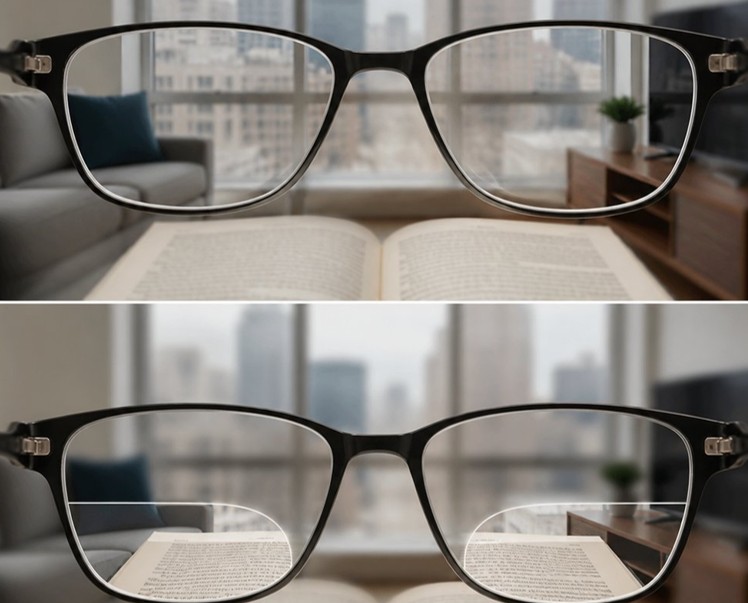
Corrective lenses that address more than one focal distance fall into two main categories. Bifocals use a visible line to separate distance and near vision into two distinct zones, giving you a clear, defined switch between the two. Progressive lenses blend those same zones gradually, without any visible line, so your eyes move smoothly from distance to intermediate to near vision.
The prescription need is often similar between the two, since both correct for the same combination of distance and near vision loss. What changes is how your eyes adjust to using it and how the lens looks once it's on your face.
Why Some Patients Prefer the Defined Zones of Bifocals
Bifocals appeal to patients who value predictability over a seamless transition. The visible line gives you a clear physical reference point, which some wearers find easier to adjust to initially compared to the gradual blend of a progressive lens. There's no guessing where to look within the lens, since the line itself marks the switch.

This defined-zone approach also tends to work well for patients switching from reading glasses who want a similar, straightforward experience in one pair. There's a shorter adjustment period for many people, since the eye simply looks through one zone or the other rather than learning to navigate a blended range. Bifocals also tend to cost less than progressives, which factors into the decision for some patients as much as comfort does.
Why Progressive Lenses Work Well for Active, Modern Lifestyles
Progressive lenses suit people who move between distances constantly throughout the day, glancing from a phone to a dashboard to a coworker across the room, all without switching glasses. The lack of a visible line also appeals to patients who prefer their glasses to look the same as any single-vision pair, since coworkers or friends often can't tell the prescription includes multiple zones at all.
Multifocal wearers sometimes run into specific challenges during the adjustment period, since the eye has to learn where within the lens to look for each distance. Peripheral distortion is common in the first week or two, and some patients notice a slight swimming sensation when they turn their head quickly. That learning curve is real, but most patients adapt within a couple of weeks and find the seamless transition worth the initial effort once it clicks.
Questions to Help You Decide Between the Two
A few honest questions make this decision easier than guessing based on what a friend or family member chose:
Do you want a visible line, or would you rather your glasses look identical to a single-vision pair?
How often do you shift focus between near, intermediate, and distance tasks throughout your day?
Are you comfortable with a short adjustment period in exchange for a more natural visual experience?
Have you worn bifocals or progressives before, and if so, what did or didn't work for you?
Does your daily routine involve a lot of screen time, driving, or detailed close-up work?
Your answers, combined with your provider's recommendation based on your prescription, usually point clearly toward one option over the other.
How Lens Technology Has Changed What's Possible
Modern lens designs have moved well beyond the basic bifocal and progressive options patients may remember from years past. Lenses built to mimic natural eye behavior represent a newer category that blurs the line between correction types, adjusting more fluidly to how your eyes naturally shift focus throughout the day.
Patients curious about these newer options, including whether they're a good candidate for advanced multifocal technology, often find that today's choices go well beyond the traditional two-option decision they expected walking in. Advances in lens materials have also made both bifocals and progressives thinner and lighter than older versions, which changes the comfort equation for anyone who previously ruled one out based on weight or appearance.
Find the Right Fit for Your Vision and Lifestyle
Choosing between progressive lenses and bifocals isn't about picking the objectively better option. It's about matching the lens design to how you actually use your eyes every day. Prescription glasses built around your specific habits make the biggest difference in how satisfied you'll be with the final result, regardless of which design you land on.
The Optical Shop helps Phenix City patients weigh these options honestly, without steering everyone toward the same recommendation. Our team looks at your prescription, daily routine, and personal preferences to help you choose confidently. Contact us today to talk through what fits your lifestyle best.

